
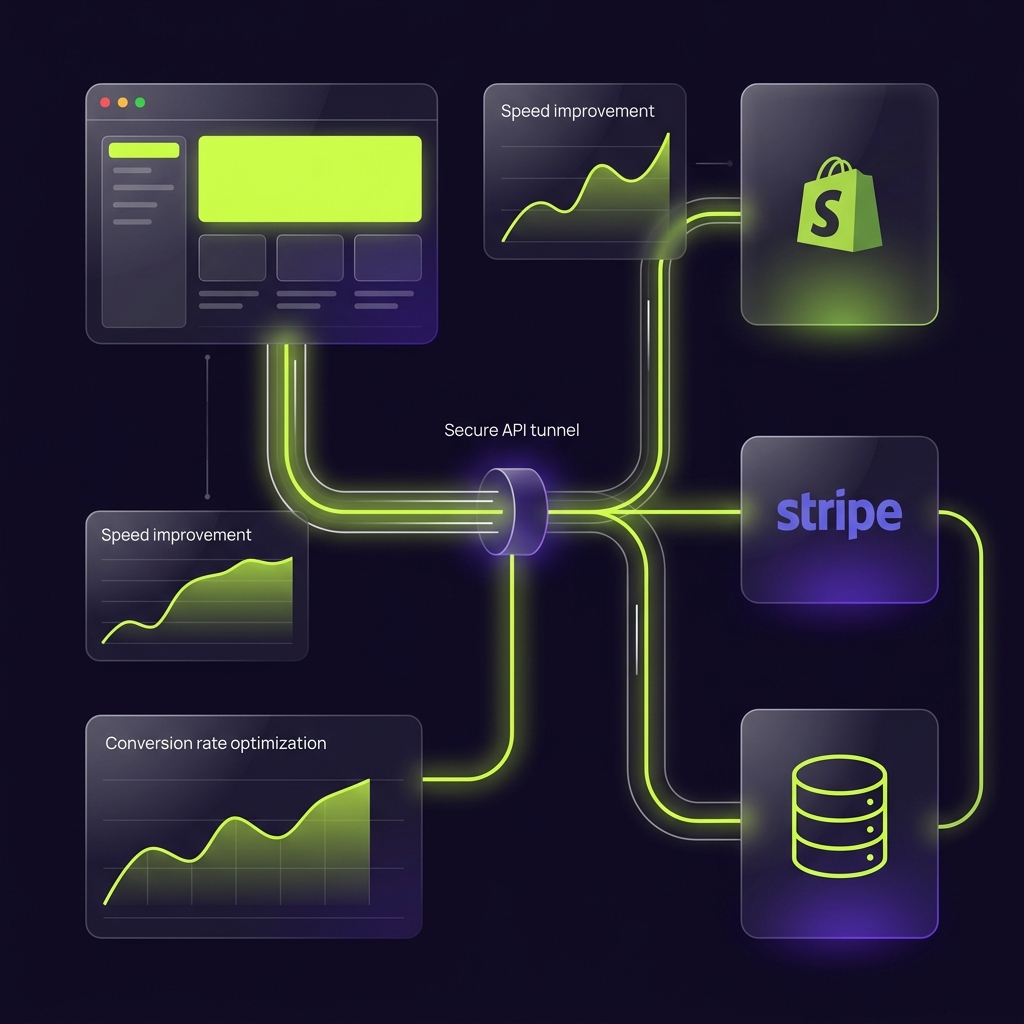
Traditional all-in-one e-commerce platforms combine the storefront (front-end) and database administration (back-end) in a single monolithic system. Although simple to launch, these platforms restrict front-end performance due to heavy server-side templates and rigid styling wrappers. Headless commerce decouples these layers completely, connecting them via fast, optimized APIs.
Why Headless Commerce Converts Better
By separating the client interface, developers can build the frontend using modern web frameworks like Next.js, hosting the entire shop on global edge CDNs. The storefront renders as static HTML, executing shopping cart updates and checkouts asynchronously. This approach removes database query latencies, delivering instantaneous page transitions.
"Every millisecond of latency eliminated directly correlates to reduced cart abandonment rates. Performance is the ultimate user experience feature."
— Elena Rostova
Measuring Core Store Metrics
Below is a comparison of standard performance and user engagement metrics observed before and after migrating clients to a headless Next.js frontend:
| Performance Metric | Monolithic Shop Average | Headless Next.js Storefront | Observed Difference |
|---|---|---|---|
| Time to Interactive (TTI) | 4.8 Seconds | 1.1 Seconds | 77% Speed Improvement |
| Add-to-Cart Conversion | 2.1% | 3.5% | 66% Conversion Lift |
| Bounce Rate (Mobile) | 58% | 31% | 46% Engagement Boost |
| Lighthouse Performance Score | 42/100 | 98/100 | 133% Rating Increase |
Decoupling the frontend also allows designers to build completely customized, interactive user pathways without fighting database templates, enabling brands to stand out and deliver memorable shopping experiences.